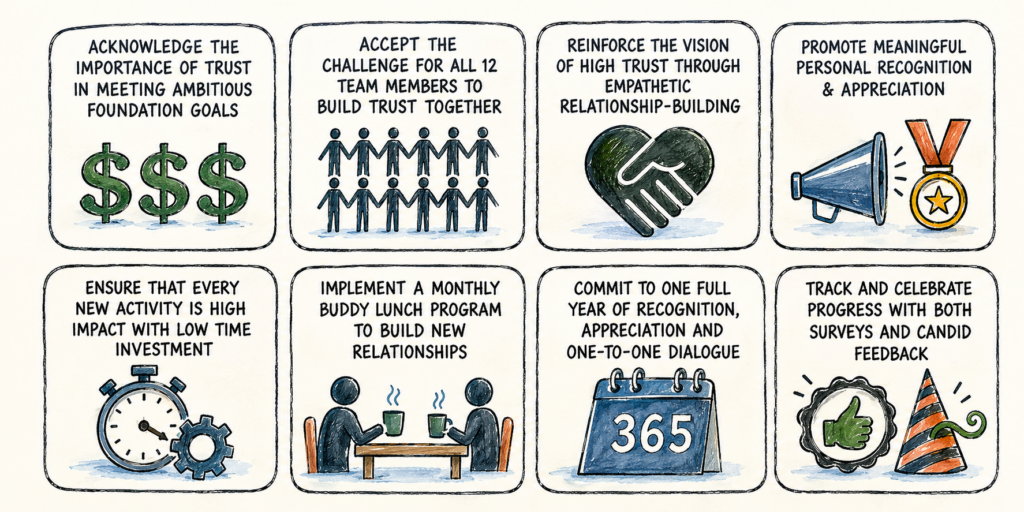
A year after moving to virtual work, the Foundation of a faith-based nonprofit hospital knew something wasn’t working.
The annual employee survey made the problem difficult to ignore. People felt overworked. They questioned whether their colleagues were carrying their share of the load. And trust – in one another and in their leader – had begun to erode.
At the same time, the Foundation was facing ambitious fundraising goals. Its Vice President of Development understood that the team couldn’t simply work harder. Something more fundamental needed to change.
The question became: How might we create a culture of trust and mutual accountability?
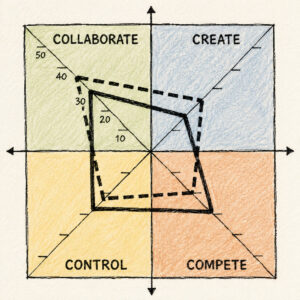
Before a one-day retreat, each of the twelve team members described both the culture they were experiencing and the culture they wanted. When their responses were brought together, a clear picture emerged. They wanted less competition and more collaboration. Less top-down control and more freedom to take productive risks.
Rather than beginning the retreat with what was wrong, we began with something the team already understood: what trust feels like when it’s working.
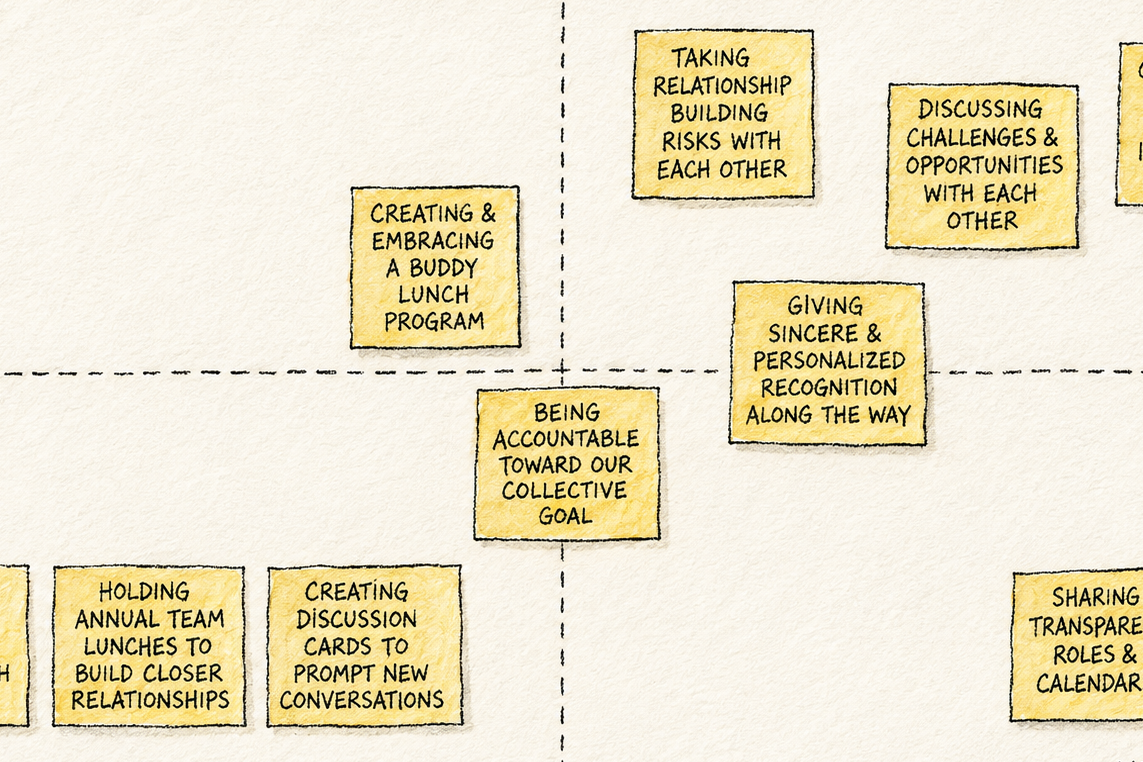
In pairs, team members shared stories of times when they had experienced trust and helped create it for others. They listened for the qualities behind those stories and captured what they heard on sticky notes. Small groups then looked across the stories for patterns.
Gradually, trust stopped being an abstract aspiration and became something the team could see and something they could do.
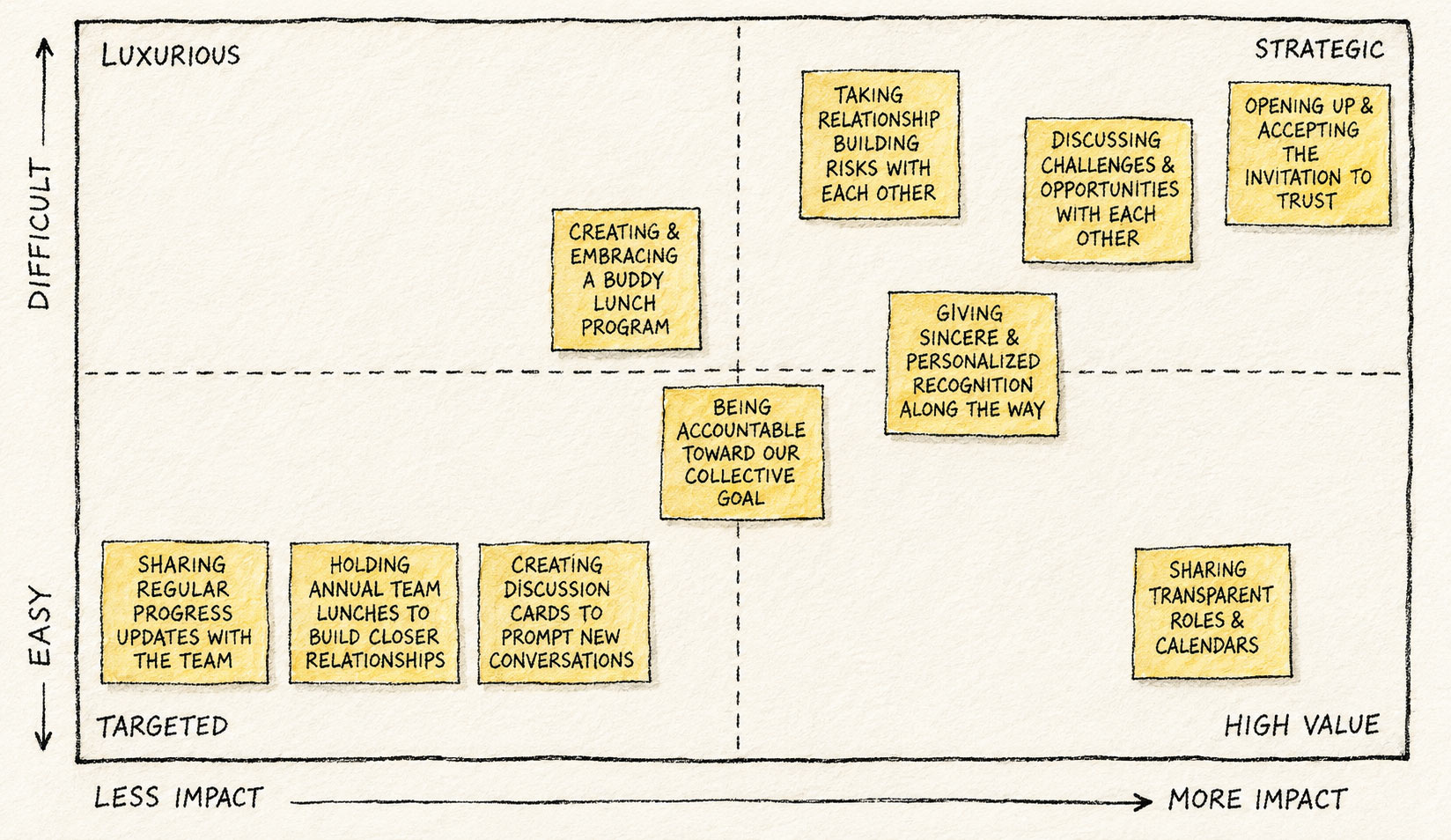
Together they identified the ten trust-building ideas they believed would make the greatest difference. They considered which would be both practical and meaningful, then created a shared path forward. Most importantly, responsibility for that path didn’t belong only to the Vice President. Every member of the team chose something they would personally help lead.
In eight hours, the team hadn’t solved every problem they faced, but something important had shifted. They understood each other differently. They could see what each person uniquely contributed. And they had developed a shared understanding of what trust required from all of them.
A year later, the employee survey confirmed what the team was already experiencing: the culture had changed. As the Vice President reflected:
“Our retreat did so much more than show us how to build trust. We recognized that every one of us is responsible for leading the way to a better workplace environment; we accepted that challenge; and we are succeeding.”
This experience reinforced something I’ve seen repeatedly in my work: lasting change is rarely something we do to people. It is something people create together. Trust was not restored because the team was given a new set of rules. It grew because people had the opportunity to listen to one another, imagine a better way of working, and take responsibility for creating it.