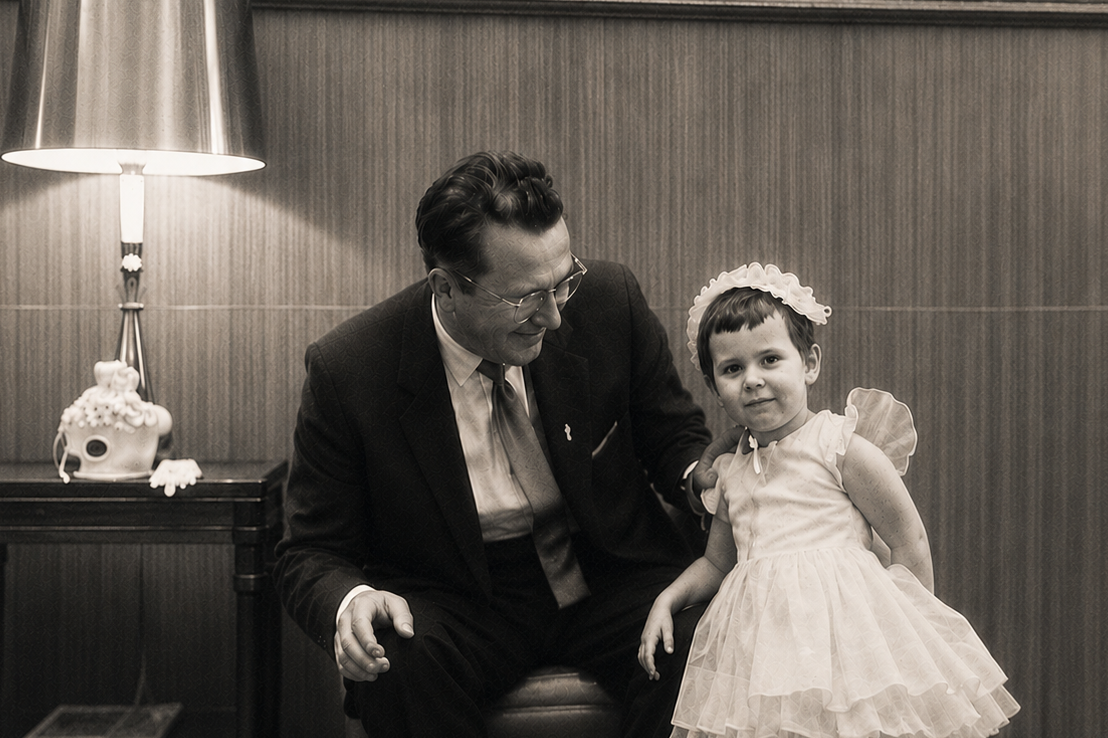
My Father always knew I was curious. It wasn’t until I earned my doctorate that he understood where that curiosity had led.
My path to earning a doctorate was unconventional from the start. At 54, while many people were focused on advancing their careers, preparing for retirement, or caring for aging parents, I decided to go back to school. Not because I wanted a promotion or a job in academia, but because I love research.
As a child, I spent summers in the library, happily chasing questions through card catalogs and stacks of books. Decades later, when I discovered Grounded Theory—a research method that begins with curiosity rather than a hypothesis—it felt surprisingly familiar.
The question I chose for my dissertation grew out of years of working with hospitals and cancer programs. I had observed that most hospitals excluded patients from conversations about treatment options, while a small number embraced a more collaborative, patient-centered approach through multidisciplinary cancer clinics.
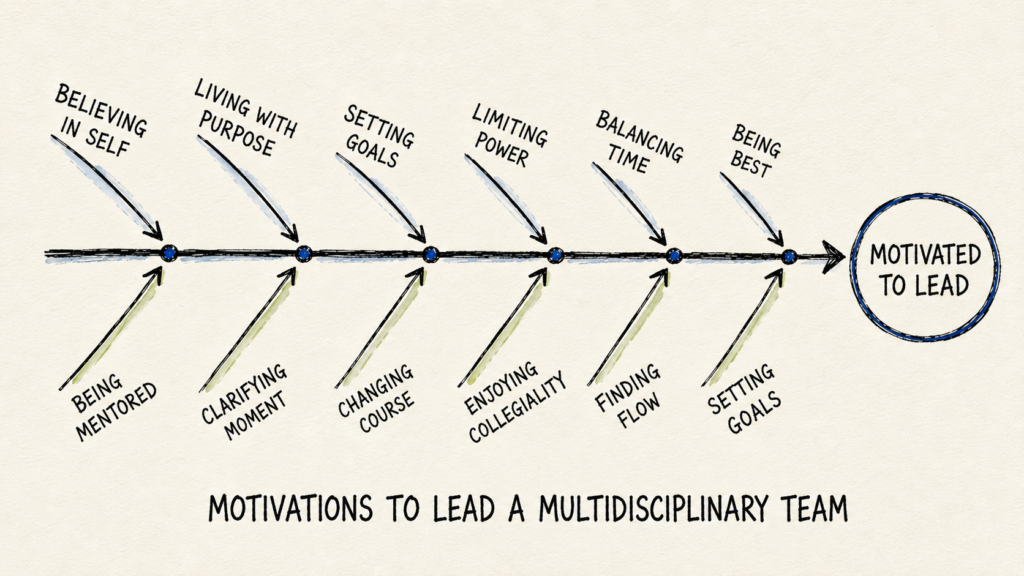
What fascinated me were the physicians who created these programs. They came from different specialties, backgrounds, and parts of the country, yet they seemed to share something important. What motivated them to challenge the status quo?
To find out, I recruited twelve pioneering physicians and traveled across the country to interview them. As I listened to their stories and mapped key moments in their lives, a remarkable pattern emerged. Nearly all had experienced strong mentorship early on. They were driven by a deep sense of purpose, welcomed change rather than resisted it, valued collaboration over power, and continually sought to improve both themselves and the teams around them.[i]
Not everyone on my dissertation committee was convinced by my unconventional methods. Fortunately, my Chair saw the value in the approach and encouraged me to follow the evidence wherever it led. What I ultimately discovered wasn’t just a set of leadership traits. I learned that the human-centered inquiry I had practiced throughout my career was every bit as rigorous and valuable as more traditional academic research.
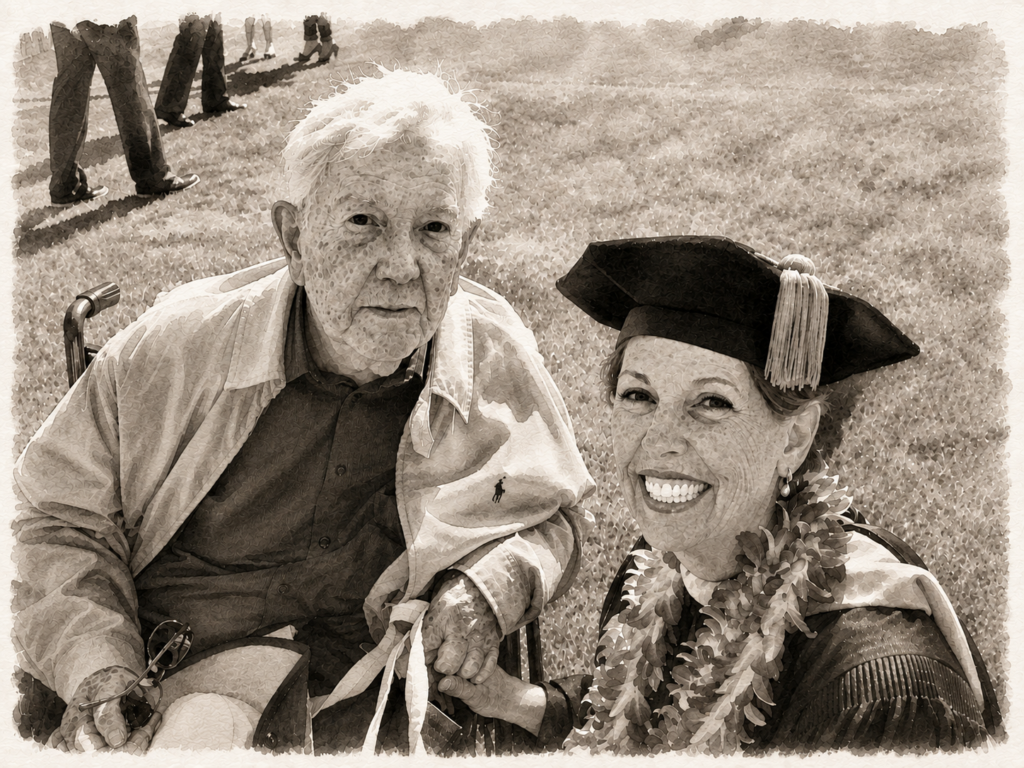
At graduation, my elderly father was there to celebrate. After the ceremony, he told me he finally “got it.” He finally knew why his curious little girl spent her summers in the library, following questions wherever they led.
Looking back, the dissertation didn’t change who I was. It simply gave a name—and a framework—to the way I’d been exploring human-centered change all along.
[i] Perrine, Lisa E., “Why doctors lead multidisciplinary prostate cancer clinics: a grounded theory study of leader motivation” (2013). Theses and Dissertations. 331.
https://digitalcommons.pepperdine.edu/etd/331